
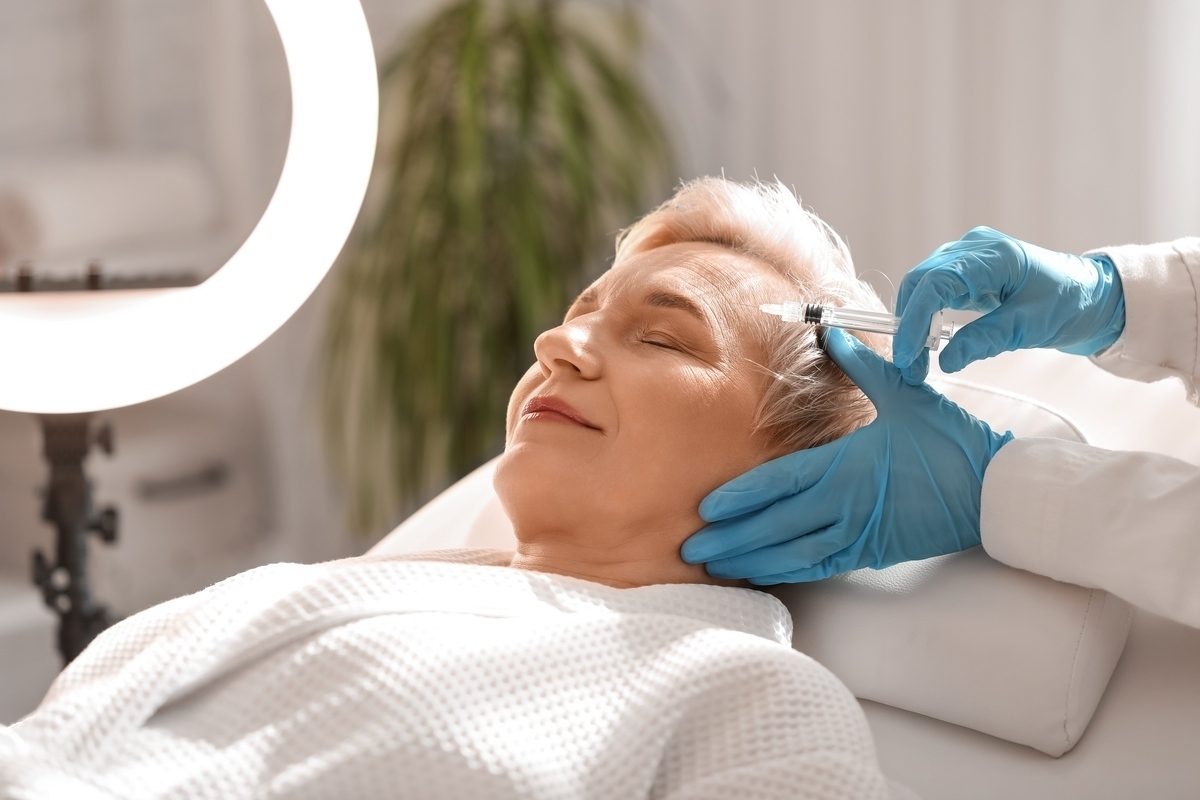
Botox and wrinkle relaxers are most often associated with forehead lines and crow’s feet, but the range of concerns they can address is broader than most people realize. Understanding the full scope of Botox treatment areas helps patients identify which of their concerns might respond to this type of treatment and which may require a different approach.
This post covers each area of the face and neck where wrinkle relaxers are commonly used and explains why each area responds to treatment. It also distinguishes between FDA-approved applications and off-label uses that are standard in clinical practice. The Botox and Wrinkle Relaxers service page provides an overview of the products available and what the consultation process looks like.
Botox and wrinkle relaxers work by temporarily blocking the nerve signals that cause specific facial muscles to contract. This mechanism makes them effective for one specific type of skin concern: dynamic wrinkles. These are the lines and creases that form as a result of repeated facial muscle movement over time.
Squinting creates crow’s feet, frowning creates the vertical lines between the brows, and raising the eyebrows creates horizontal forehead creases. Over years of repetition, these movements leave permanent marks in the skin even when the face is at rest.
Areas where wrinkle relaxers are not effective include concerns caused by volume loss, gravity, or sun damage. Static lines visible at rest in the lower face, hollow cheeks, and thinning lips are not addressed by this type of treatment. Understanding which type of concern you have is the starting point for understanding which Botox treatment areas apply to your situation.
The FDA has specifically approved botulinum toxin products for a defined set of cosmetic applications. These are the areas with the most clinical trial data supporting both safety and effectiveness.
According to the American Academy of Dermatology, botulinum toxin therapy is used to treat frown lines between the eyebrows and crow’s feet around the outer corners of the eyes, with results that typically appear within three to seven days and last approximately three to four months.
The three FDA-approved cosmetic Botox treatment areas are:
These three areas represent the most commonly treated zones in practice and the starting point for most patients exploring wrinkle relaxers for the first time.
The upper face is where the most well-known Botox treatment areas are found, and where wrinkle relaxers are most widely used and best supported by clinical evidence. Within this zone, providers address several distinct concerns.
Forehead lines are treated by relaxing the forehead muscle that runs across the brow. The goal is to soften horizontal creases while preserving enough muscle activity to maintain natural expression and avoid a heavy brow. Provider skill and dosing precision are particularly important in this area.
Frown lines are treated by relaxing the muscles between the brows. This is typically the highest-priority area for patients bothered by a resting expression that looks angry or tired. Results in this area are among the most consistent of all wrinkle relaxer applications.
Crow’s feet are treated by relaxing the muscle around the outer eye at the corners. This area responds very well to treatment and tends to produce a brightening and softening effect that patients find highly satisfying.
Brow position can be subtly adjusted through strategic injections around the brow. By selectively relaxing muscles that pull the brow downward while preserving the muscles that elevate it, a provider can create a mild lifting effect. This is sometimes called a chemical brow lift and is an off-label application.
Bunny lines are the diagonal wrinkles that appear across the bridge of the nose when a person scrunches their face. They are treated by relaxing the nose muscle and are a common addition to forehead and frown line treatments.
The mid face offers fewer common wrinkle relaxer applications than the upper face, but several targeted uses are well established in clinical practice.
According to a peer-reviewed narrative review published in PubMed on cosmetic botulinum toxin in the oral and maxillofacial area, botulinum toxin is indicated for patients with dynamic wrinkles in areas such as the forehead, around the eyes, along the nose, and around the mouth. Excessive contraction of specific muscles including bulky jaw muscles, gummy smiles, and depressed mouth corners can also achieve results through precise muscle targeting.
Nasal fine lines are the subtle creases that develop along the sides of the nose from repeated facial movement. Treatment targets the muscles responsible for nose wrinkling and is often combined with bunny line treatment.
Gummy smile is a concern in which a significant portion of the upper gum is visible when smiling due to overactive muscles of the upper lip. A small amount of wrinkle relaxer reduces the lift the upper lip produces during a smile. The result is less gum tissue showing when the patient smiles.
Around the eye treatment can extend to the lower eyelid area in some patients to address fine lines under the eye. This is a highly technique-sensitive area that requires provider experience and careful assessment before treatment.
The lower face includes several Botox treatment areas that are less frequently discussed but widely used by experienced providers. All of these applications are off-label.
Lip flip is a procedure in which a small amount of wrinkle relaxer is injected into the muscle of the upper lip. According to the Cleveland Clinic, a lip flip involves injecting Botox into parts of the upper lip including the corners of the mouth and the edges of the lips, with an average of two to four units in the upper lip and two units in the lower lip. The result is a subtle rolling outward of the upper lip, creating the appearance of a fuller lip without adding volume.
Perioral lines are the fine vertical lines that form above the upper lip from repeated pursing movements. Treatment relaxes the muscle of the upper lip to soften these lines. This area requires careful dosing to avoid affecting the ability to speak or eat normally.
Chin dimpling is a concern in which the chin skin develops a cobblestone or puckered texture from overactivity of the chin muscle. A small amount of wrinkle relaxer smooths this texture and is a straightforward, commonly requested treatment.
Masseter reduction involves injecting wrinkle relaxer into the masseter muscles on either side of the jaw. The masseter is the large chewing muscle that can become enlarged from teeth grinding or naturally over time.
Treatment gradually reduces the size of this muscle over several months. The result is a slimmer lower face profile and reduced jaw tension for patients who grind their teeth.
Downturned corners of the mouth can be subtly lifted by relaxing the muscles that pull the mouth corners downward. This treatment creates a more neutral or slightly upturned resting expression.
The neck is a less commonly discussed but legitimate zone of wrinkle relaxer treatment. Two primary concerns are addressed in this area.
Platysma bands are the vertical cords that develop in the neck as the platysma muscle ages and loses tone. The platysma is a thin sheet of muscle that runs from the jaw down to the chest. They can become visible at rest or when the neck is tensed. Injecting wrinkle relaxer into this muscle temporarily relaxes these bands, producing a smoother neck appearance. This procedure is sometimes called the Nefertiti Lift when combined with jawline treatments.
Horizontal neck lines are the ring-like creases that develop across the neck over time. Treatment involves careful injection along these lines to relax the muscle activity that deepens them. This is a delicate area that requires provider experience and a conservative approach.
Both neck applications are off-label uses of botulinum toxin. They are well established in clinical practice but require a thorough assessment to determine whether a patient is an appropriate candidate. For a broader understanding of the products used across all these treatment zones, the post on the types of wrinkle relaxers available covers how Botox, Dysport, and Daxxify compare.
One of the most common practical questions patients ask when learning about Botox treatment areas is whether multiple areas can be treated in a single appointment, and the answer is yes for most patients.
Many patients treat two or three areas at once. A common combination is forehead lines, frown lines, and crow’s feet, which are the three FDA-approved areas and the natural starting point for most patients. Providers often assess all three together because treating them in combination produces more balanced results than treating one in isolation.
Adding lower face or neck treatments to the same appointment is also common. The total number of areas treated in one session depends on:
Patients who are new to Botox treatment areas often start with one or two zones and expand in subsequent appointments once they understand how their muscles respond to treatment.
Wrinkle relaxers are most effective for dynamic wrinkles that appear or deepen with facial movement. Lines that are already deeply etched and visible at rest may soften with treatment but may not fully resolve. A combination of wrinkle relaxers and other treatments such as fillers or skin resurfacing may be more appropriate for deep static lines.
Yes, which is why provider skill and placement matter significantly. The muscles of the face interact with one another, and injecting one muscle can influence the behavior of adjacent muscles. An experienced provider accounts for these interactions in their treatment planning to produce balanced and natural results.
No. A lip flip uses a wrinkle relaxer to relax the muscle of the upper lip, which causes it to roll outward slightly. It creates the appearance of a fuller lip without adding volume. Lip filler adds actual volume using a hyaluronic acid gel. The two serve different purposes and can be used together or independently.
Dosing is based on the size and strength of the muscle being treated, the severity of the lines present, and the patient’s preference for how significant a reduction they want. Larger and stronger muscles generally require more product. Providers adjust dosing based on how the patient responded in previous treatments.
Off-label means the FDA has not specifically approved the application for that indication, not that the treatment is unsafe. Many off-label uses have extensive clinical evidence and are standard practice among experienced injectors. The safety of any off-label treatment depends on the provider’s knowledge of facial anatomy and their experience with that specific application.
A consultation for wrinkle relaxers is the appropriate time to review all of the areas you are concerned about, not just the most obvious ones. Providers typically assess the full face during a consultation rather than focusing only on the specific area a patient mentions first.
Sharing the full picture of your concerns allows the provider to develop a treatment plan that addresses them in a coordinated and balanced way. Knowing which Botox treatment areas apply to your situation helps you arrive at the consultation with a clearer sense of what you want to discuss.
Questions worth raising at a consultation:
Those in the Lutz area can learn more about the wrinkle relaxer consultation process at the Botox in Lutz, FL page.
If you have been wondering which of your facial concerns wrinkle relaxers can address, speaking with a qualified provider during a consultation is the most reliable way to get a clear, personalized answer.

Personalized aesthetic and wellness care designed to help you look refreshed, feel confident, and support your well-being from the inside out.
Website Designed by IL Webdesign