
Losing weight is one of the hardest things a person can do, and dealing with loose skin afterward can feel like an unfair obstacle after all that hard work. If you have lost weight and noticed that your skin is not bouncing back the way you hoped, you are not alone. Many people researching radiofrequency skin tightening are in exactly this situation, wondering whether a non-surgical treatment can actually help tighten skin that has been stretched and weakened over time. In this article, you will learn what causes loose skin after weight loss, what radiofrequency skin tightening can realistically do about it, which areas respond best, and what factors determine how much improvement you can expect.
Why Weight Loss Causes Loose Skin
To understand whether radiofrequency skin tightening can help, it is useful to first understand why loose skin develops after weight loss in the first place.
When you gain weight, your skin stretches to accommodate the increased volume beneath it. Over time, this sustained stretching affects the collagen and elastin fibers in the dermis, the structural middle layer of the skin. These fibers are responsible for the skin’s ability to contract and return to its original shape. Extended stretching weakens and degrades them.
When weight is lost, the fat that was filling out the skin is reduced or removed, but the skin itself does not automatically contract to match the new body shape. If the collagen and elastin fibers have been sufficiently weakened, the skin lacks the structural integrity to tighten on its own. The result is the loose, hanging skin that many people experience after significant weight loss.
Several factors influence how much loose skin develops and how well it recovers on its own. These include the amount of weight lost, the speed of weight loss, age, genetics, how long the person carried the extra weight, and the degree of sun damage or lifestyle factors that affected collagen health prior to weight loss.
Gradual weight loss generally gives the skin more time to adapt compared to rapid loss. Younger skin with stronger collagen reserves tends to recover better than older skin. But for many people, some degree of loose skin is simply a reality after meaningful weight loss regardless of how carefully they approached the process.
What Radiofrequency Skin Tightening Does to Address Loose Skin
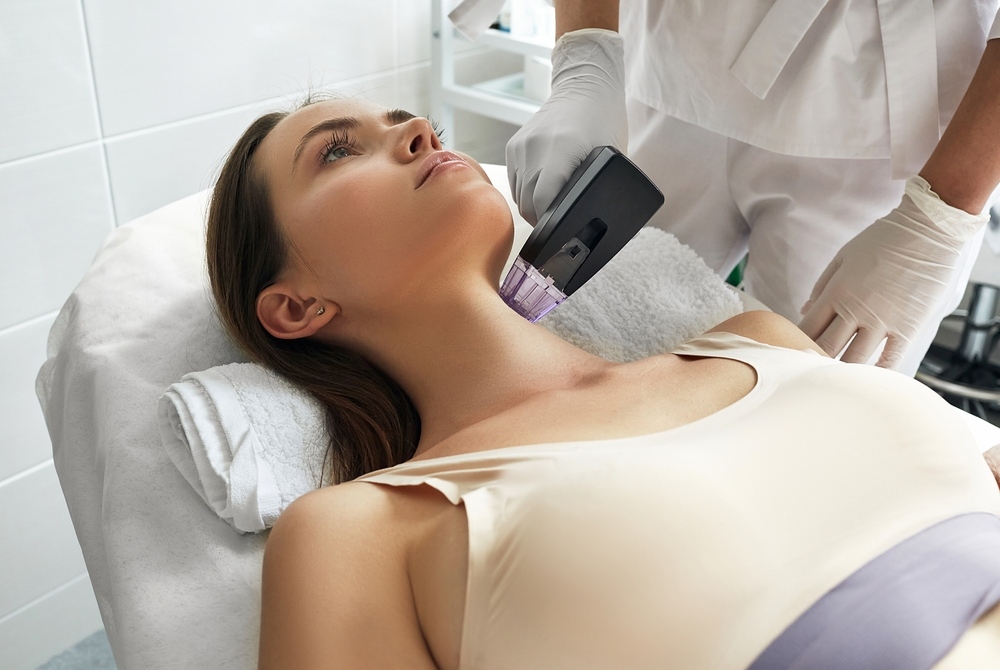
Radiofrequency skin tightening works by delivering controlled electromagnetic energy into the dermis, where it converts to heat. This controlled heat triggers two responses that are directly relevant to post-weight-loss skin laxity.
The first response is immediate. Existing collagen fibers contract slightly when exposed to controlled heat, producing a subtle tightening effect that some people notice after their first session.
The second response is longer-term and more significant. The heat activates fibroblasts, the specialized cells in the dermis responsible for producing new collagen and elastin. When fibroblasts detect the heat signal, they interpret it as a sign that repair is needed and begin producing new structural proteins to reinforce the dermal layer.
According to the National Institutes of Health, fibroblast activation and new collagen synthesis are central to the skin remodeling process observed after thermal treatments, and this response is consistent and measurable in clinical studies.
Over the weeks and months following treatment, this new collagen network develops and matures, gradually improving the structural integrity and firmness of the skin. For people with post-weight-loss skin laxity, this process directly addresses the underlying cause of the problem: weakened, depleted collagen and elastin in the dermis.
What Results Are Realistic After Weight Loss
This is where honest context matters most, because the degree of improvement that radiofrequency skin tightening can deliver depends heavily on the severity of the loose skin being addressed.
For mild to moderate skin laxity after weight loss, RF treatment tends to produce meaningful and visible improvement. People in this category often see real firming and tightening in treated areas over the course of a treatment series, with results that continue improving for several months after the final session.
For more significant skin laxity, particularly cases involving large amounts of loose, hanging skin after major weight loss, radiofrequency skin tightening can still produce improvement but the results will be more modest relative to the degree of laxity present. In these cases, RF treatment can improve skin texture, firmness, and tone, but it is not designed to address excess skin the way surgical body contouring procedures do.
The most useful way to think about it is this. Radiofrequency skin tightening works by rebuilding the skin’s internal structure. It cannot remove excess skin or replicate the structural correction that surgery provides. What it can do is meaningfully improve firmness and elasticity in skin that has the capacity to respond to collagen stimulation, which covers a significant portion of the post-weight-loss population.
Which Areas Respond Best
Radiofrequency skin tightening can be applied to most areas of the body where post-weight-loss skin laxity is a concern. Some areas tend to respond particularly well to RF treatment.
The face and neck are among the most responsive areas. Skin in these areas tends to be thinner and more reactive to collagen stimulation, and the degree of laxity after weight loss is often mild to moderate rather than severe.
The abdomen is one of the most commonly treated body areas after weight loss. Skin laxity in this area after significant weight reduction can range from mild to substantial, and RF treatment produces the most satisfying results in cases where laxity is mild to moderate.
The inner arms and thighs are also commonly addressed. These areas often develop loose skin after weight loss and respond well to a series of RF treatments when the degree of laxity is not extreme.
Treatment areas are always customized based on individual concerns, and a consultation with your provider is the most accurate way to assess which areas are likely to respond well in your specific case.
How Many Sessions Are Needed
Post-weight-loss skin laxity typically requires a more committed treatment series than mild age-related laxity. Because the collagen and elastin in the dermis have been more significantly affected by extended stretching, more stimulation is generally needed to produce meaningful structural rebuilding.
Most providers recommend starting with a series of sessions spaced several weeks apart, with the exact number depending on the treatment area, the degree of laxity, and how your skin responds. After an initial series, periodic maintenance sessions help sustain the collagen rebuilding over time.
Patience is particularly important with post-weight-loss skin. The collagen remodeling process is gradual regardless of the starting point, and the improvements continue developing for months after each session. Measuring results too early leads to inaccurate conclusions. Most people see meaningful change between four and eight weeks after beginning treatment, with optimal results typically appearing at three to six months. For a full breakdown of what the improvement timeline looks like at each stage, the radiofrequency skin tightening results guide walks through the process in detail.
The Connection Between Weight Loss and Skin Tightening Treatment
One of the most important timing considerations for post-weight-loss skin tightening is weight stability.
Radiofrequency skin tightening produces the best and most durable results when your weight is stable. If you are still actively losing weight, the skin is still adapting to ongoing changes in the volume beneath it, and treating it during this period is less effective. The collagen you build during treatment may be stretched again if significant additional weight loss occurs after your sessions.
The general recommendation is to be at or close to your goal weight and maintaining that weight consistently before beginning a skin tightening series. This gives the new collagen produced during treatment the best possible environment to develop and stabilize, and it ensures that your results are as long-lasting as possible.
If you have achieved your weight loss goal through a medically supervised program, the XERF skin tightening treatment guide is a helpful resource for understanding how skin tightening treatment fits into your overall wellness plan.
Frequently Asked Questions
1. How long after weight loss should I wait before starting skin tightening treatment?
The general guidance is to wait until your weight has been stable for at least three to six months before beginning a radiofrequency skin tightening series. This ensures your skin has had time to adapt to its new baseline and that your weight is not still actively changing. Starting treatment while your weight is still fluctuating reduces the effectiveness and durability of results.
2. Can radiofrequency skin tightening replace surgery for loose skin after weight loss?
For mild to moderate skin laxity, RF treatment can produce significant improvement without surgery. For severe cases involving large amounts of hanging skin, surgery remains the most effective option for meaningful structural correction. RF treatment and surgical procedures address different degrees of laxity and are not always direct substitutes for one another. A consultation with your provider will give you the clearest picture of which approach is appropriate for your situation.
3. Does it matter how the weight was lost?
The method of weight loss matters less than the amount lost, the speed of loss, and how long the weight was carried. Gradual weight loss tends to result in less severe laxity than rapid loss. People who lost weight through GLP-1 medications like semaglutide or tirzepatide may notice skin laxity as a side effect of faster body composition changes, and RF treatment is a commonly recommended option for addressing this. According to the American Academy of Dermatology, non-surgical skin tightening treatments that stimulate collagen production are among the most evidence-supported options for improving skin firmness without surgery.
4. Will the results last if I maintain my weight?
Yes. With consistent weight maintenance and periodic maintenance sessions, the results of a radiofrequency skin tightening series can be sustained over the long term. The new collagen produced during treatment continues to support skin firmness as long as the underlying volume beneath the skin remains stable.
5. Is it safe to do RF treatment on the abdomen?
Yes. Radiofrequency skin tightening is safe for use on the abdomen and is one of the most commonly treated body areas. The treatment is non-invasive and does not require any incisions or recovery time. Results in the abdominal area develop gradually over several months following a series of sessions.
What to Take Away From This
Radiofrequency skin tightening can be a genuinely effective option for loose skin after weight loss, particularly for people dealing with mild to moderate laxity who are at a stable weight and have realistic expectations about gradual, non-surgical improvement.
It works by rebuilding the collagen and elastin that weight gain and loss have depleted from the dermis, producing firmer, more resilient skin over the course of a treatment series. It is not a substitute for surgery in cases of severe laxity, but for the right candidate it delivers real and meaningful results without needles, incisions, or recovery time.
If you are still weighing your options, reading more about how XERF works is a helpful next step toward understanding what this treatment could realistically do for your skin after weight loss.
Medical Disclaimer
The information provided in this blog is for educational purposes only and should not be construed as medical advice. Every individual’s skin and health conditions are unique, and results from non-surgical skin tightening treatments may vary. It is important to consult with a qualified healthcare provider or licensed aesthetic professional before undergoing any cosmetic treatments to determine if they are right for your specific needs. Inside Out Aesthetics & Wellness does not guarantee any specific results, and all procedures should be discussed with a professional to assess your suitability for treatment.
